Published January 2026
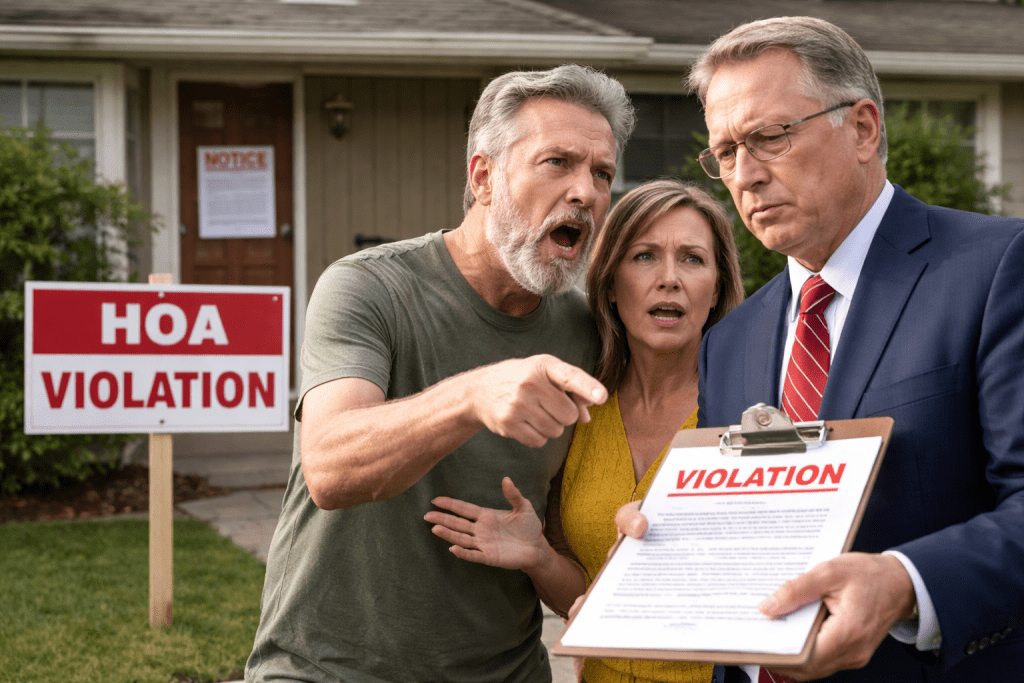
For years, Georgia homeowners have shared stories that sound more like cautionary tales than community living. Escalating fines, unclear rules, minimal communication, and in the most extreme cases, home foreclosures over relatively small amounts of unpaid dues.
In response, Georgia lawmakers are advancing a package of homeowner association reform bills aimed at restoring balance, transparency, and accountability. Among them, Senate Bill 406 (SB 406) stands out as one of the most comprehensive proposals introduced in recent years.
Officially titled the Georgia Property Owners’ Bill of Rights Act, SB 406 represents a significant shift in how HOAs are regulated in Georgia and why many homeowners see it as long overdue.
The Problem: When HOA Power Goes Unchecked
Homeowners associations serve an important role in maintaining shared spaces and enforcing community standards. However, unlike cities or counties, HOAs in Georgia have historically operated with:
- Limited state oversight
- Minimal reporting requirements
- Broad enforcement authority
- Strong legal leverage over individual homeowners
Investigative reporting across the state has documented cases where fines snowballed into liens, legal fees multiplied, and homeowners had little recourse short of expensive litigation. One of the most troubling examples involved an HOA foreclosing on a home and purchasing it at auction for just $3.24, despite the homeowner having already paid thousands of dollars toward the balance.
Under current Georgia law, those outcomes, while deeply concerning, can still be legal.
SB 406 seeks to change that.
What Is Senate Bill 406?
SB 406 is part of a broader slate of HOA-related legislation introduced during the 2026 Georgia General Assembly Regular Session. Collectively, these bills address:
- HOA board governance and fiduciary duties
- Limits on fines and enforcement practices
- Foreclosure thresholds and procedures
- Dispute resolution alternatives
- Transparency and homeowner access to records
Legislative source:
Georgia General Assembly, 2026 Session
Senate Bill 406 (SB 406)
Georgia Property Owners’ Bill of Rights Act
https://www.legis.ga.gov/legislation/20252026/SB406
Key Provisions of SB 406 Explained
1. Stronger Foreclosure Protections for Homeowners
Under existing Georgia law, HOAs may initiate foreclosure once a homeowner owes $2,000 or more, and that amount can include fines for covenant or rule violations.
SB 406 changes this in three critical ways:
- Raises the minimum foreclosure threshold from $2,000 to $4,000
- Limits foreclosure-eligible debt to unpaid assessments only
- Excludes fines, penalties, and violation fees from foreclosure calculations
Legislative reference:
SB 406, Section relating to amendments of HOA foreclosure authority
Georgia General Assembly, 2026 Session
Why this matters:
Foreclosure becomes a true last resort rather than a pressure tactic for minor or subjective violations.
2. Prohibiting Conflicts of Interest in HOA Foreclosures
SB 406 would prohibit the following parties from bidding on or purchasing homes at HOA foreclosure sales:
- HOA board members
- HOA officers
- HOA employees
- Property management companies
- Individuals or entities affiliated with the HOA
Legislative reference:
SB 406, Conflict of Interest and Foreclosure Sale Restrictions
Georgia General Assembly, 2026 Session
Why this matters:
This removes financial incentives that could encourage aggressive or abusive enforcement practices.
3. Mandatory HOA Registration with the Georgia Secretary of State
For the first time in Georgia history, all HOAs would be required to register annually with the Georgia Secretary of State.
Registration requirements include:
- A $100 annual registration fee
- Identification of the association and officers
- Submission of a recent financial statement
HOAs that fail to register would be legally barred from:
- Collecting assessments
- Issuing fines
- Recording liens
- Initiating foreclosure actions
Legislative reference:
SB 406, HOA Registration and Enforcement Authority
Georgia General Assembly, 2026 Session
Why this matters:
Transparency becomes mandatory, and enforcement authority is tied directly to compliance.
4. Creation of a State HOA Oversight and Review Board
The annual registration fees would fund a state-level HOA oversight board empowered to:
- Receive and investigate homeowner complaints
- Review HOA compliance with governing documents
- Refer potential criminal violations to law enforcement
- Provide a non-judicial dispute review process
Legislative reference:
SB 406, Establishment of HOA Oversight Board
Georgia General Assembly, 2026 Session
Why this matters:
Homeowners gain access to neutral oversight without immediately resorting to costly court proceedings.
5. Codified Rights for Homeowners
SB 406 explicitly outlines homeowner rights, including:
- Reasonable access to association records
- Proper notice of meetings and votes
- Voting and participation protections
- Requirements that board members act in good faith
- Protections for displaying flags and political signage within reasonable guidelines
Legislative reference:
SB 406, Homeowner Rights and Board Duties
Georgia General Assembly, 2026 Session
Why this matters:
Clear statutory rights reduce arbitrary enforcement and inconsistent interpretation of rules.
Legislative Intent: De-escalation and Accountability
One of the bill’s sponsors, Matt Brass, emphasized the human cost of unresolved HOA conflicts:
“It’s just literal hate. If we can help mediate that and have someone non-biased review the situation, hopefully we can solve it and neighbors get back to being neighbors.”
The goal of SB 406 is not to weaken HOAs, but to introduce accountability where little previously existed.
Industry Perspective
The Community Associations Institute (CAI), a national organization representing HOA boards and management companies, has stated its support for transparency and fairness while cautioning lawmakers to balance homeowner protections with the realities of volunteer-led associations.
CAI has also expressed support for safeguards that prevent conflicts of interest in foreclosure processes.
Why SB 406 Is Good for Georgia Homeowners
From a homeowner’s standpoint, SB 406 delivers several meaningful benefits:
- Reduced risk of foreclosure over minor or disputed issues
- Improved financial transparency and reporting
- Access to independent review outside the court system
- Clearly defined rights enforceable under state law
For buyers evaluating HOA-governed communities, these reforms also increase predictability and confidence, which strengthens Georgia’s overall housing market.
What Happens Next
SB 406 is currently advancing through legislative committees, and amendments are expected before final passage. Lawmakers involved in drafting the bill agree that accountability is the central objective.
As Senator Brass noted, there has historically been no meaningful oversight mechanism for HOAs in Georgia. SB 406 is designed to fill that gap.
Bottom Line
HOAs exist to support communities, not to create adversarial relationships between neighbors.
SB 406 does not eliminate HOA authority. It modernizes it, introduces transparency, and restores balance between collective governance and individual property rights.
For Georgia homeowners, it represents a significant step toward fairness and healthier communities.