
Georgia snow days are rare, unpredictable, and memorable. This guide is built for how winter weather actually works here. Not how it works up north. Not how we wish it worked. But how it really plays out on Georgia roads, in Georgia homes, and across Georgia neighborhoods.
Table of Contents

1) Georgia Snow Is Not Cute. It Is Unpredictable
Why a Georgia snow day is different
Ice beats snow. Temperatures swing fast. Bridges freeze first.
A Georgia snow day is not a postcard moment. It is a chemistry experiment. We get just enough moisture to look harmless, followed by rapid temperature swings that turn roads into skating rinks. Snow melts during the day, refreezes overnight, and suddenly the biggest risk is not accumulation. It is ice.
Add in geography and infrastructure, and the stakes change quickly.
-
Bridges and overpasses freeze first. Cold air circulates above and below the deck, so they ice over even when surface streets look fine.
-
Temperature whiplash is real. A sunny 38 degree afternoon can become a 22 degree evening in a few hours, locking in black ice where you least expect it.
-
Road treatment is limited compared to northern states. Georgia does not maintain the same fleet of plows, salt barns, or brine trucks you would see in Michigan or New York. Crews prioritize interstates and major routes, not neighborhood roads or secondary arterials.
A two-wheel-drive state with a once-in-a-while problem
Georgia is, for the most part, a two-wheel-drive state. Unless you are out in the country or intentionally drive something built for rough conditions, most vehicles on the road are not equipped for snow or ice.
We also do not own the gear our northern counterparts consider basic.
-
Tire chains. Almost nobody has them.
-
Snow shovels. Maybe one old plastic shovel in the garage, if that.
-
Ice melt by the bucket. Usually bought after the first freeze, not before.
And that is okay. Georgia is not built for constant winter weather. About once per decade we will see a truly disruptive storm. In between, we tend to get a snow day every one to three years. Just enough to keep us humble and remind everyone that the safest move is often staying put.
This is why “just drive slow” is not good advice here. Our roads, vehicles, and driving culture are simply not conditioned for it.
The promise of this guide
This is not about panic or pretending Georgia is Minnesota. It is about reality.
The goal of this snow day survival guide is simple:
Keep your people safe, protect your house from avoidable damage, and still find ways to enjoy the rare pause that a Georgia snow day brings.
Stay informed: official alerts and apps we trust
If there is a State of Emergency, school closures, or travel advisories, rely on official sources, not rumors.
-
Georgia Emergency Management and Homeland Security Agency (GEMA)
Statewide emergency updates, road conditions, and safety guidance
https://gema.georgia.gov -
Governor of Georgia
Executive orders, emergency declarations, statewide closures
For real-time local notifications, these are the apps installed on my phone and the ones we recommend:
-
CobbGOV App
Local government alerts, closures, and county-specific updates -
WSB-TV Weather App
Radar, forecasts, and push notifications you can trust in North Georgia
Quick rule of thumb: If GEMA says stay off the roads, believe them. Georgia snow days are not the time to test your luck or your brakes.

2) The Georgia Snow Day Reality Check
Snow is rare. Ice is the problem.
When winter weather hits Georgia, it is usually not about inches of snow. It is about what happens after the snow or sleet falls. Thin layers of ice form where you do not expect them, often hours after things look fine.
The real risks to plan for
-
Black ice
Nearly invisible and most common overnight and early morning, especially after daytime melting. It forms fast and disappears slow. -
Power outages
Ice adds weight to trees and lines. Georgia has heavy tree cover, and limbs do not have to be large to knock out power. -
Fallen trees and downed lines
Saturated ground plus ice equals uprooted trees. Never assume a line is dead. -
Frozen pipes
Exterior walls, crawl spaces, and uninsulated garages are the usual failure points. A short freeze can still cause real damage.
The most dangerous thing you can do is drive
In Georgia, travel is often the highest risk activity during a winter event. Conditions change block by block. A main road may be wet while the next bridge is solid ice. Neighborhood roads are often untreated. Most vehicles are not equipped for winter traction.
If you do not absolutely have to go somewhere, do not.
What GDOT consistently warns about
The Georgia Department of Transportation repeats the same guidance every winter:
-
Bridges and overpasses freeze first
-
Black ice forms in shaded areas and refreeze zones
-
Do not pass salt or brine trucks
-
Delay travel until daylight and warmer temperatures when possible
Georgia snow rule: If your gut says this feels sketchy, trust it.
3) 24 Hours Before: The “Don’t Panic, Just Prepare” Checklist
The 20-minute prep that saves your whole weekend
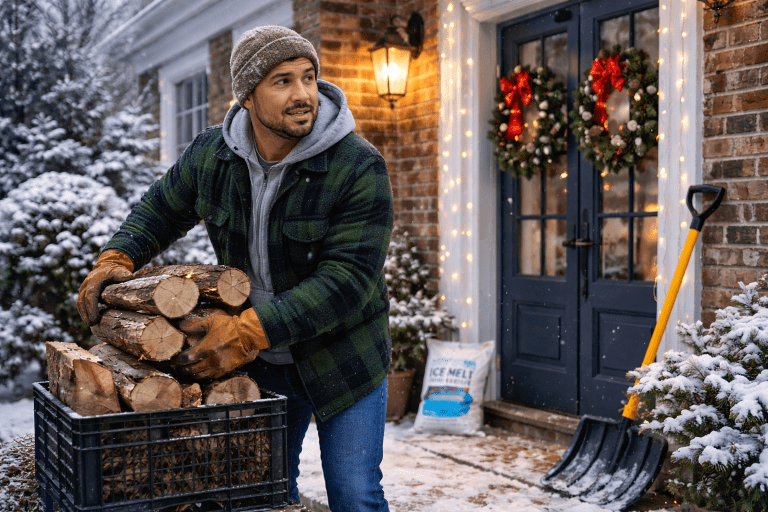
This is where Georgia snow days are won or lost. You are not preparing for a survival scenario. You are preparing for a few days of inconvenience, limited mobility, and possible power interruptions. A small amount of preparation done early removes most of the stress later.
House essentials: the non-negotiables
Think in terms of continuity. If stores close, roads ice over, or power flickers, what do you need to keep daily life moving smoothly for a few days?
Water, food, and medications are the obvious basics, but lighting is where many households get caught off guard. Flashlights with fresh batteries and battery-powered lanterns allow you to safely light rooms without relying on open flames. Candles feel traditional, but power outages combined with kids, pets, or clutter are how fires start. Light should be portable, stable, and hands-free whenever possible.
Warmth planning
Georgia homes lose heat faster than most people expect, especially during overnight temperature drops. The goal is not to heat the entire house. It is to stay comfortable in a smaller footprint.
Extra blankets should be pulled out ahead of time so no one is searching in the dark. Choosing one main living area as a warm zone allows body heat and limited heat sources to work more efficiently. If space heaters are used, they should be modern units with tip-over protection and should never be left unattended. Fireplaces should only be used if they are known to be safe, properly vented, and monitored closely.
Grills, camp stoves, and propane heaters should never be used indoors. Carbon monoxide is a far greater danger than cold air.
Pipe protection
Short freezes still break pipes in Georgia. Most cold-weather plumbing damage happens not because temperatures are extreme, but because homes are not designed for prolonged freezes.
Dripping faucets on exterior walls keeps water moving and reduces pressure buildup. Opening cabinet doors under sinks allows warm indoor air to circulate around plumbing. Outdoor hoses should be disconnected, and crawl space vents checked if applicable. These steps take minutes and prevent some of the most expensive and disruptive snow-day damage homeowners face.
This is one of the highest return actions you can take.
Expanded readiness items
These items are not required, but if you already own them, this is the time to make sure they are ready.
Fully charged battery packs and devices keep communication open and stress low. Backup lanterns or headlamps make hands-free movement safer during outages. Candles should remain a last resort and never be unattended.
If you have a generator, it should be started and tested before the storm, not during it. Fuel should be safely stored, extension cords rated for outdoor use, and carbon monoxide detectors confirmed to be working. Generators must always be operated outdoors and away from windows and doors.
For heat and cooking, firewood should be dry and accessible, propane tanks checked, and charcoal on hand if you plan to grill outdoors. Matches or lighters should be easy to find. Grills remain outdoor-only, even during outages.
Yard cleanup tools such as chainsaws should be checked only if you are experienced using them. Extra fuel, bar oil, gloves, eye protection, and boots are helpful, but trees touching power lines should always be left to professionals.
Mental readiness matters too. Snow days feel much longer when the Wi-Fi is out. Books, board games, and offline entertainment downloaded in advance help keep the day enjoyable rather than tense.
Car readiness, even if you plan to stay home
Plans change. Emergencies happen. Roads clear unevenly.
A full gas tank, charged devices, and a simple car kit provide flexibility if you need to leave unexpectedly or sit idle for a period of time. Georgia is largely a two-wheel-drive state, and most vehicles are not equipped for ice. Preparedness here is not about confidence behind the wheel. It is about options.
Power outage preparation
Know how to respond before the lights go out. Save your electric provider’s outage number and rely on official outage maps and alerts rather than social media speculation.
If you encounter downed power lines, never touch them or attempt to move debris. Keep children and pets far away and assume all lines are live until confirmed otherwise by professionals such as Georgia Power or your local electric membership corporation.
Bottom line
A Georgia snow day does not require panic or perfection. It rewards calm preparation and a little foresight. Do this once, early, and the rest of the event becomes manageable instead of stressful.

4) Day Of: Safety Rules That Keep a Snow Day From Turning Into a Problem
THE “4 PS” SNOW DAY MINI-CHECK
Throughout the day, run a quick mental check that covers the areas most likely to turn a small issue into a big one.
People:
Make sure everyone in the house is warm and layered. Check on elderly neighbors or family members by phone or text. Keep kids inside once roads begin refreezing in the evening.
Pets:
Bring pets indoors or ensure proper shelter. Prevent water bowls from freezing. Wipe paws after trips outside to remove ice or chemicals.
Pipes:
Confirm faucets are still dripping where needed. Make sure cabinet doors remain open. Pay attention to unusual sounds or drops in water pressure. If something feels off, shut off the water and investigate early.
Plants:
Bring potted plants indoors. Cover outdoor plants if possible. Move sensitive plants away from exterior walls. Plants can be replaced. Pipes are much harder.
BOTTOM LINE
Georgia snow days reward patience. Staying home, slowing down, and checking the basics keeps a short winter event from becoming a long-term headache.
5) Snow Day Fun, Georgia Edition
Low prep, high payoff
Georgia snow days are short, unpredictable, and memorable for that exact reason. You do not need elaborate plans or expensive gear. A few simple ideas go a long way if you keep safety first.
Outdoor fun
Only when conditions are safe
If roads are quiet, daylight is out, and ice is manageable, a little outdoor time goes a long way.
1) The “Dirty Snowman”
And how to make it slightly less dirty
Georgia snowmen almost always look rough. That is because our snow is thin and sits on top of pine needles, leaves, and sweetgum balls. When you roll snow across the yard, it collects everything.
That is normal. That is also part of the charm.
Why it happens
- We rarely get deep snow
- Lawns are not dormant like northern yards
- Snow melts and refreezes quickly
Optional pro tip for cleaner snow
- Lay out a tarp the night before snowfall
- Or blow leaves and debris off a small patch of lawn ahead of time
Dirty snowmen still count.
2) Suburban snow tubing
The “redneck but memorable” version
What you need
- Sled or snow tube
- Tow rope
- Slow, controlled vehicle or ATV
- Quiet, flat route
Safety rules
- No traffic anywhere near the route
- No hills that slope toward roads
- Slow speeds only
- Helmets encouraged
- One adult driving, one adult spotting
This is about laughter, not speed.
3) The plastic-bag boot hack
For kids without snow gear
How it works
- Socks
- Plastic bag layer
- Another pair of socks
- Shoes
This creates a waterproof barrier that keeps feet drier longer.
What not to do
- Do not put bags over shoes
- That creates a serious slip hazard
Cozy indoor wins
When things refreeze or daylight fades, head inside and lean into it.
Recipe: Snow Cream
A classic southern snow day treat
Ingredients
- 1 cup clean, fresh snow
- 2 to 3 tablespoons sugar
- 1 half teaspoon vanilla extract
- 2 to 3 tablespoons milk or cream
Instructions
- Collect fresh snow from a clean surface.
- Place snow in a bowl.
- Add sugar and vanilla.
- Gently stir in milk or cream until combined.
- Serve immediately.
Food safety note
- Use only freshly fallen snow
- Avoid roadside or refrozen snow
- If the snow looks questionable, skip this recipe
Recipe: Snow Day Hot Cocoa Level-Up
Because cocoa deserves upgrades
Base
- Hot cocoa mix
- Whole milk
Optional add-ins
- Vanilla syrup
- Whipped cream
- Marshmallows
- Crushed candy canes
- Caramel or chocolate syrup
Instructions
- Heat milk until steaming but not boiling.
- Whisk in cocoa mix until smooth.
- Add vanilla syrup if using.
- Top with whipped cream and marshmallows.
- Finish with candy cane pieces or drizzle if desired.
Set everything out buffet-style and let everyone build their own.
Bottom line:
Georgia snow days are not about perfection. They are about simple fun, smart boundaries, and enjoying the novelty while it lasts. Keep it safe, keep it cozy, and make the memories while you can.
6) If the Lights Go Out: Stay Warm and Safe
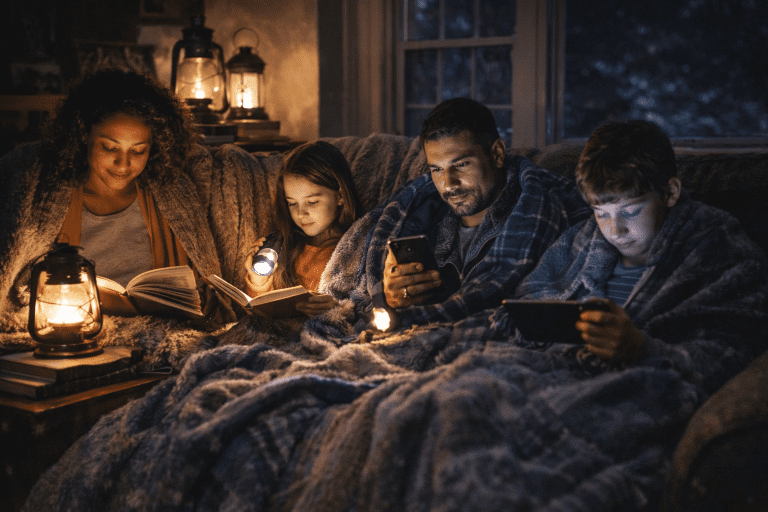
Power outages are one of the most common side effects of winter weather in Georgia. Ice on trees and lines can knock power out even when snowfall is minimal. The goal here is simple: stay warm, stay visible, and avoid creating new hazards inside your home.
Power outage playbook
Light the house safely
- Use flashlights, lanterns, or headlamps instead of candles
- Keep one flashlight in each main room if possible
- Save phone batteries by lowering screen brightness and closing unused apps
Quick lighting hack
Place a flashlight upside down on a clear water or milk jug filled with water. The light diffuses through the jug and creates an instant lantern that can brighten an entire room. This works especially well for kitchens, hallways, or bathrooms.
Candles seem harmless, but most winter outage fires start with open flames and distractions.
Staying warm without creating risk
Layer first
- Wear multiple layers rather than relying on one heat source
- Hats and socks make a bigger difference than people expect
- Use blankets generously, especially for kids and pets
Space heaters
- Only use heaters with tip-over protection
- Keep them at least three feet from anything flammable
- Never leave them running unattended or while sleeping
Fireplaces
- Make sure the flue is open before lighting
- Keep screens in place
- Never leave a fire unattended
What not to use indoors
- Grills
- Camp stoves
- Propane heaters
- Generators
These create carbon monoxide risks that are far more dangerous than the cold itself.
Generator safety reminders
If you are using a generator:
- Run it outdoors only
- Keep it far from doors, windows, and vents
- Use outdoor-rated extension cords
- Make sure carbon monoxide detectors are working
Never run a generator in a garage, even with the door open.
Downed lines and outage reporting
Downed power line safety
- Always assume lines are live
- Do not touch them
- Do not attempt to move branches or debris
- Keep children and pets far away
If you see a downed line or a tree on a line, report it immediately.
For outages and hazards:
- Use your electric provider’s official outage map or app
- Contact Georgia Power or your local electric membership corporation
- Avoid relying on social media for restoration timelines
Restoration often takes longer in icy conditions, but crews cannot work safely until weather improves.
Bottom line:
Cold is uncomfortable. Fire and carbon monoxide are deadly. A calm, well-lit home with layered warmth beats risky shortcuts every time.

7) After the Storm: The 30-Minute Recovery Plan
Do this before life gets busy again
Georgia snow and ice events end quickly, and normal life resumes fast. The mistake most people make is jumping straight back into routines without checking for quiet problems that show up after the thaw.
Give yourself 30 focused minutes before the week takes over.
Walk the property
Slow, careful, and observant
Do a lap around the house once ice starts melting.
- Look for fallen limbs or hanging branches
- Watch for lingering ice patches in shaded areas
- Check fences, gutters, and roof edges for damage
- Pay special attention to anything near power lines
Do not touch downed lines or branches resting on them. Always assume lines are live and keep a safe distance.
If something looks questionable, document it and report it rather than trying to fix it yourself.
Check plumbing and exterior fixtures
Cold damage often shows up after water pressure returns to normal.
- Turn exterior hose bibs off and back on briefly to check for leaks
- Look for dripping, cracking, or reduced water pressure
- Check under sinks, in crawl spaces, and around water heaters
- Listen for unusual sounds when faucets run
If you find damage:
- Take photos immediately
- Shut off water if needed
- Document everything for insurance
Early documentation matters more than people realize.
Restock and reset
Snow days use up supplies in ways you do not notice until the next outage.
- Recharge battery packs
- Replace used batteries
- Refill water supplies
- Restock pantry basics and medications
- Refuel generators and vehicles if used
Put everything back where it belongs so you are not starting from zero next time.
One last check-in
Before you move on:
- Check on neighbors who may need help clearing debris
- Make sure pets are back on normal routines
- Close attic access panels and cabinets you opened for warmth
This closes the loop and officially ends snow day mode.
Bottom line:
Georgia winter weather rarely lasts long, but the damage can linger if you rush past recovery. Thirty calm minutes after the storm can prevent weeks of repairs, insurance stress, or surprise expenses.
8) Cobb County Emergency Resource Guide
Cobb County Emergency Resource Guide (Quick Chart)
|
Situation |
Who to Call |
Contact Info |
Notes |
|
Life-threatening emergency |
Emergency Services |
911 |
Fire, injury, gas leaks, downed power lines posing immediate danger |
|
Power outage or downed line (Cobb EMC area) |
Cobb EMC |
770-429-2100 https://www.cobbemc.com/outages |
Call 911 first if lines are down or sparking |
|
Power outage (Georgia Power area) |
Georgia Power |
1-888-891-0938 |
Most areas outside Marietta city limits |
|
Power outage (City of Marietta) |
Marietta Power |
770-794-5160 |
City of Marietta residents only |
|
Natural gas smell or suspected leak |
Atlanta Gas Light |
877-427-4321 |
Leave immediately, then call 911 from a safe location |
|
Water main break or sewer backup |
Cobb County Water System |
770-419-6201 |
Emergency line for major infrastructure issues |
|
Downed tree on power line |
Emergency Services + Electric Provider |
911, then your power company |
Never touch or attempt removal |
|
Tree blocking a public road |
Emergency Services |
911 |
Call immediately if roadway is blocked or unsafe |
|
Animal emergency or stray animal |
Cobb County Animal Services |
County non-emergency dispatch |
Injured or dangerous animals |
9) Georgia Snow Day Preparedness Checklist
Georgia Snow Day Preparedness Checklist
24 Hours Before the Storm
|
Category |
Checklist |
|
Home essentials |
☐ Drinking water (3 days) ☐ Shelf-stable food ☐ Prescription medications ☐ Flashlights working ☐ Extra batteries ☐ Battery-powered lanterns ☐ Phone chargers and battery packs fully charged |
|
Warmth & safety |
☐ Extra blankets accessible ☐ Main living area designated for heat ☐ Space heaters tested and have tip-over protection ☐ Fireplace flue checked and clear ☐ Carbon monoxide detectors working |
|
Power & backup gear |
☐ Generator started and tested (if owned) ☐ Fuel safely stored ☐ Outdoor-rated extension cords ☐ Headlamps or backup lanterns |
|
Cooking & comfort |
☐ Firewood stacked and dry ☐ Propane tanks checked and filled ☐ Charcoal available ☐ Matches or lighters easy to find |
|
Yard & cleanup |
☐ Chainsaw tested (if owned) ☐ Bar oil and fuel ready ☐ Gloves, eye protection, boots |
|
Vehicle readiness |
☐ Gas tank filled ☐ Phone charger in car ☐ Blanket in trunk ☐ Bottled water ☐ Jumper cables |
Pipe Protection
|
Area |
Checklist |
|
Interior plumbing |
☐ Drip faucets on exterior walls ☐ Open cabinet doors under exterior-wall sinks ☐ Close crawl space vents if applicable |
|
Exterior hose bibs |
☐ Disconnect hoses ☐ Turn off interior shutoff valve ☐ Open exterior faucet to drain water ☐ Leave faucet open during freeze ☐ Install foam or insulated cover |
|
Attic plumbing |
☐ Open attic access door if plumbing is present ☐ Allow warm air to circulate |
Power Outage Preparation
|
Task |
Checklist |
|
Lighting |
☐ Flashlight in each main room ☐ Battery lanterns ready ☐ DIY lantern setup ready (flashlight + water jug) |
|
Devices |
☐ Phones and tablets charged ☐ Devices set to low-power mode |
|
Outage readiness |
☐ Electric provider outage number saved ☐ Know who provides your power |
Day Of the Storm
|
Focus |
Checklist |
|
Travel |
☐ Stay home unless absolutely necessary ☐ Avoid bridges and overpasses ☐ Do not pass salt or gravel trucks |
|
4 Ps check |
☐ People warm and safe ☐ Pets sheltered and cared for ☐ Pipes monitored and dripping ☐ Plants protected or moved inside |
After the Storm (30-Minute Recovery)
|
Task |
Checklist |
|
Property walk-through |
☐ Check for fallen limbs ☐ Watch for ice patches ☐ Inspect areas near power lines from a distance |
|
Plumbing check |
☐ Inspect exterior faucets ☐ Check under sinks ☐ Look in crawl spaces ☐ Monitor water pressure |
|
Documentation |
☐ Photograph any damage ☐ Record details for insurance |
Restock & Reset
|
Task |
Checklist |
|
Supplies |
☐ Recharge battery packs ☐ Replace used batteries ☐ Refill water supply ☐ Restock pantry basics |
|
Equipment |
☐ Refuel generator if used ☐ Refill vehicle gas tank |
|
House reset |
☐ Close attic access panels ☐ Close cabinets opened for warmth |
Emergency Contacts (Fill In)
|
Service |
Contact |
|
Electric provider |
__________________________ |
|
Gas provider |
__________________________ |
|
Water emergency |
__________________________ |
|
Insurance claims |
__________________________ |
10) Final Thoughts
Georgia snow days are rare, which is exactly why they stick with us. They slow everything down, pull people back into their homes, and remind us how connected we really are to our neighbors and our communities.
If you grew up here, you probably have a snow-day memory that still makes you smile. A lopsided snowman full of pine needles. Tubing down a quiet street that would normally be packed with traffic. Hot cocoa that somehow tasted better because the power was out and everyone was in the same room. Or, in my case a commute home from a morning listing appointment taking 14 hours and an 8 mile walk during Snowmageddon 2014.
We would love to hear yours. Share your favorite Georgia snow-day tradition with us and pass this guide along to someone who could use it. A little shared knowledge goes a long way when weather turns unpredictable.
One last safety reminder
If you must get out, follow guidance from the Georgia Department of Transportation. Delay travel until daylight when possible, watch bridges and overpasses, and never pass salt or gravel trucks. Getting home safely is always the priority.
From our home to yours
This guide reflects the same philosophy we bring to our work every day. Preparation matters. Clear information matters. Community matters.
At Sellect Realty, we focus on helping people understand not just where they live, but how to live well there. In our real estate business, that means guiding buyers and sellers through decisions that affect their families, their finances, and their peace of mind. We do the work ahead of time so surprises are minimized later.
That mindset applies just as much to a snow day as it does to a home purchase.
If you want to see how these ideas play out in real life, check out Episode 48 of Georgia Living, where we talk through dirty snowmen, suburban tubing, snow cream, and why a little preparation changes everything.
Thanks for being part of this community. Stay safe, stay warm, and we will see you on the other side of the thaw.